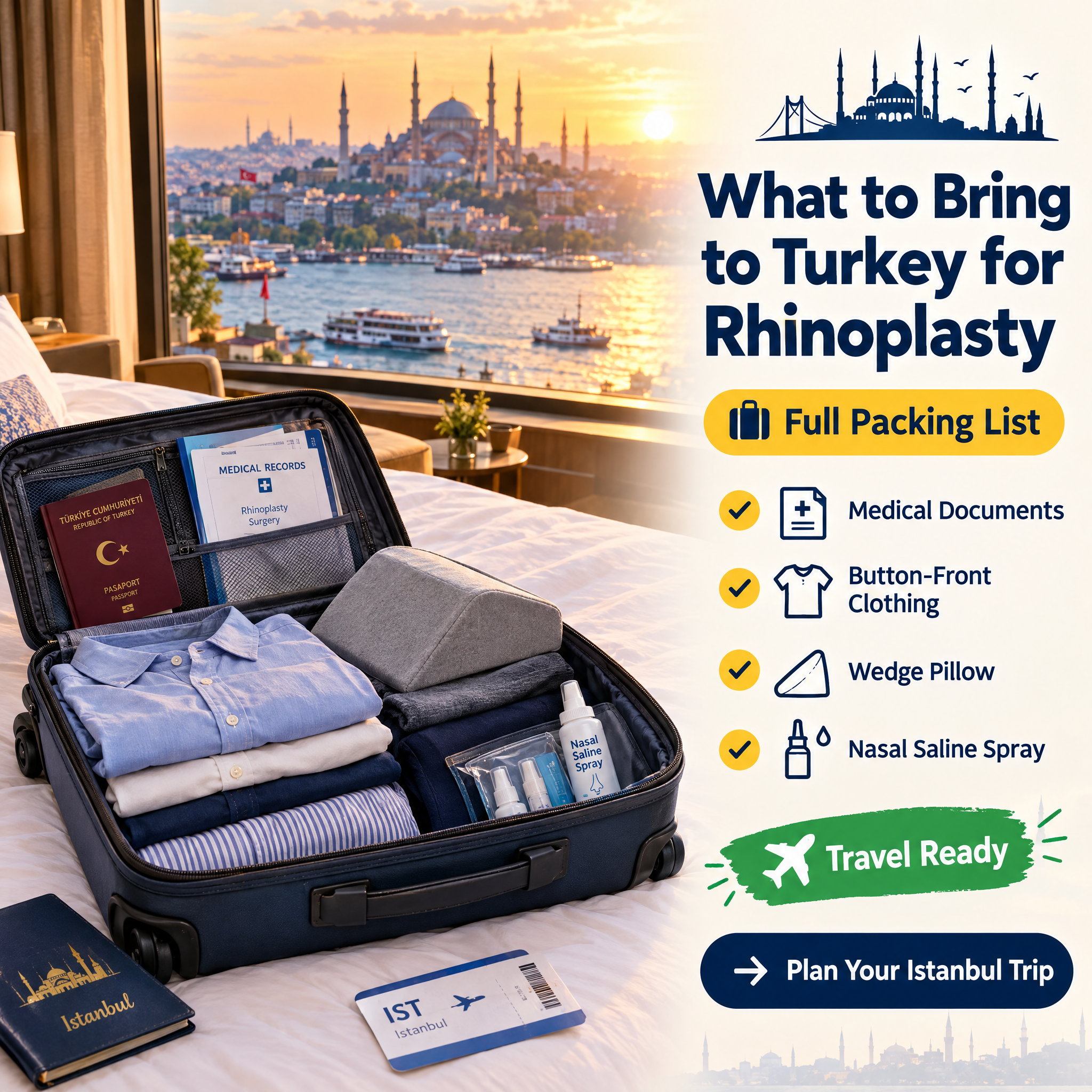
What to Bring to Turkey for Rhinoplasty
A complete packing guide for your rhinoplasty trip to Istanbul — from medical documents to comfort essentials, and what not to bring.
Written and medically reviewed by Ufuk Askeroglu, MD — Plastic, Reconstructive and Aesthetic Surgeon. Last reviewed: November 2026.
Planning Your Trip to Istanbul for Rhinoplasty
Most patients travelling from abroad for rhinoplasty in Istanbul stay for 7–10 days — long enough for the initial post-operative phase and the cast-removal appointment, before returning home. With the right preparation, that period can be comfortable and low-stress. The list below covers everything you need to pack, in one place.
Your Complete Rhinoplasty Packing Checklist
Documents (Essential)
- Passport — required for hospital admission
- Travel insurance documents — including policy number and 24-hour emergency contact; ensure your policy covers medical treatment abroad and medical evacuation
- Your pre-operative consultation notes — the written plan or summary from your surgeon, ideally including the agreed changes and technique
- A written list of all current medications — including supplements, vitamins, and over-the-counter products; share this with your surgeon and anaesthetist at admission
- Allergy documentation — especially any drug allergies
- Previous surgical records — if you have had any prior nasal surgery, bring operative notes or a summary if available
- Emergency contact details — written down, not only on your phone
Clothing
- Button-front or zip-front shirts and jackets — nothing pulled over the head; this is important for the first week when the cast is in place
- Loose, comfortable trousers or leggings — avoid anything tight at the waist if you tend to feel nauseous after anaesthesia
- Comfortable flat shoes — you will be doing short walks and do not want to manage heels in the early recovery days
- A warm layer — hospital rooms are often air-conditioned regardless of season
- Pyjamas or comfortable nightwear — again, front-fastening is easier
Comfort and Recovery Items
- Wedge pillow or travel pillow — sleeping elevated is important for the first two weeks; a wedge pillow travels well and makes this much easier
- Eye mask — light sensitivity and swelling around the eyes make an eye mask useful in the early days
- Loose headband or hair clip — keeping hair out of the face without touching the nose; relevant if you have longer hair
- Loose sunglasses — for going outside; do not rest frames on the bridge. Large sunglasses that rest on the cheekbones rather than the nose are ideal
- Phone charger and portable battery — you will be resting in your room and using your phone more than usual
- Earphones or headphones — for entertainment during downtime
- Books, downloaded shows, or other quiet entertainment — the first three days especially involve a lot of resting
Toiletries to Pack or Buy Locally
Your clinic will provide or prescribe most medical items. What you will want independently:
- Gentle fragrance-free face wash — you will be washing your face carefully around the cast
- Gentle moisturiser — the skin around a swollen nose can become dry
- Lip balm — mouth breathing in the first days dries the lips
- Soft-bristle toothbrush — less pressure around the face when brushing
- SPF 50 sunscreen — for the nose once you are going outside; direct UV on healing tissue should be avoided
Note on medications: Your clinic will prescribe antibiotics, pain relief, anti-inflammatories, and saline nasal spray locally. Do not stop taking your regular prescribed medications without discussing this with your surgeon first. Stop aspirin, ibuprofen, fish oil, vitamin E, and similar blood-thinning supplements two weeks before surgery as directed.
What Not to Bring
- Glasses — you cannot wear them anyway for six weeks post-surgery; bring contacts instead if you need vision correction
- Make-up for the nose area — you cannot apply it while the cast is on and should not for some time after
- Large amounts of cash — most clinics and pharmacies accept card; a modest amount of Turkish lira for meals and transport is sufficient
- Heavy luggage — you will not be doing any weight-bearing activity and do not need entertainment, fitness, or activity gear
Practical Tips for the Trip
- Arrange airport transfer in advance — do not plan to manage public transport the day after surgery
- Stay somewhere with a lift if possible — climbing stairs is fine but tiring when recovering
- Have easy food options nearby — appetite may be reduced in the first days; light soups, yoghurt, soft foods are ideal
- Bring someone with you if possible — having a companion for the first 48 hours is reassuring and practically useful
- Keep the clinic’s WhatsApp number saved — most Istanbul clinics communicate via WhatsApp and respond quickly to questions
Frequently Asked Questions
What documents do I need to bring for rhinoplasty in Turkey?
You will need your passport, travel insurance documents, your pre-operative consultation notes, a written list of all current medications, and documentation of any allergies. If you have had previous nasal surgery, bring records or operative notes if available, as they will be useful to your surgeon.
How much cash should I bring to Turkey for rhinoplasty?
Most reputable clinics accept card payment. It is sensible to carry some Turkish lira for incidentals — meals, local transport, pharmacy purchases. Post-operative medications prescribed locally are generally inexpensive. Many major pharmacies and supermarkets also accept card payment, so you do not need to carry large amounts of cash.
Can I fly after rhinoplasty surgery?
Most surgeons allow patients to fly home 5–7 days after rhinoplasty, once the initial healing is confirmed. For longer flights, using a brief decongestant nasal spray before boarding helps manage cabin pressure changes. Sleep elevated on the plane if possible, avoid alcohol, and move around the cabin periodically.
What should I wear after rhinoplasty?
Wear clothes that fasten at the front or sides — avoid anything pulled over the head. Avoid wearing glasses that rest on the bridge of the nose for at least six weeks. Contact lenses are preferable during this period, or glasses can be taped to the forehead to avoid pressure on the bridge.
What medications should I bring to Turkey for rhinoplasty?
Your clinic will prescribe post-operative medications locally. Bring a written list of all current medications to share with your surgeon and anaesthetist. Stop aspirin, ibuprofen, fish oil, and vitamin E two weeks before surgery as directed by your surgeon. Do not stop any prescribed medication without discussing it with your surgeon first.
